> For the complete documentation index, see [llms.txt](https://docs.fulfillmenttools.com/documentation/llms.txt). Markdown versions of documentation pages are available by appending `.md` to page URLs; this page is available as [Markdown](https://docs.fulfillmenttools.com/documentation/apps/technical-requirements/honeywell-hardware-scanner-configuration.md).
# Honeywell hardware scanner configuration
{% hint style="success" %}
#### Prerequisites
* Honeywell hardware scanner
* Android device meeting the [Technical requirements](/documentation/apps/technical-requirements.md)
* DataWedge app installed on the Android device
Note: If the Android device uses multiple user profiles, the configuration steps in this guide must be performed using the same profile where the target application is installed.
{% endhint %}
## Activate hardware scanner
Honeywell devices with built-in hardware scanners are managed by the DataWedge application. This application connects the scanner to the fulfillmenttools apps.
{% hint style="info" %}
A separate DataWedge profile must be configured for each fulfillmenttools app. For example, you'll need to create one profile for the Store Operations App and one profile for the Inventory App.
{% endhint %}
To use the hardware scanner of a Honeywell device, follow the steps below to set it up to work with fulfillmenttools.
{% stepper %}
{% step %}
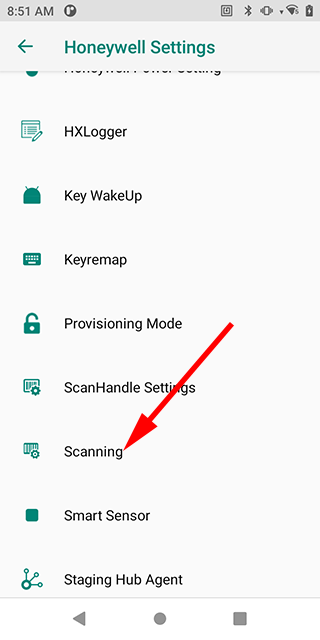
**Access the Honeywell settings**
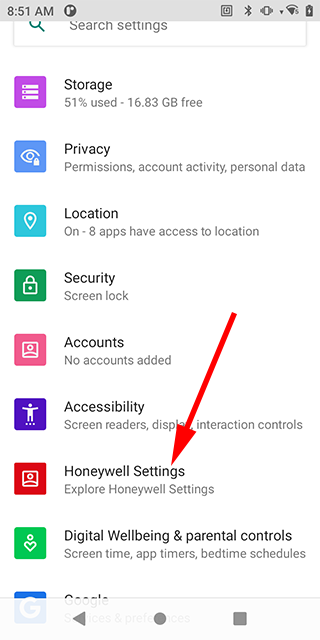
Open the Android device settings, then select **Honeywell Settings**.
 {% endstep %}
{% step %}
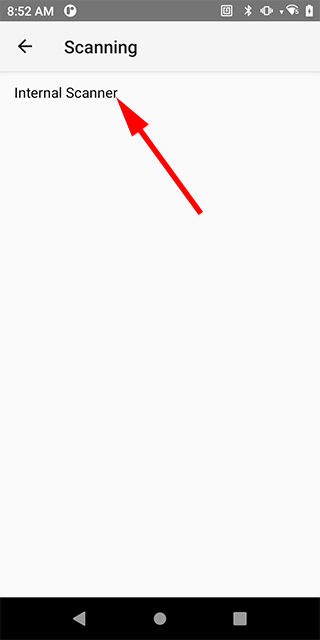
**Select your scanner**
Select **Scanning**, then select the relevant scanner from the list.
{% endstep %}
{% step %}
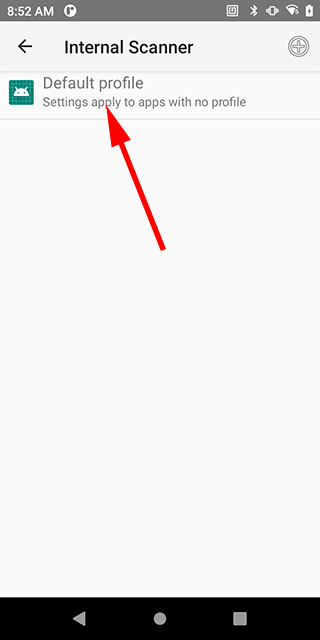
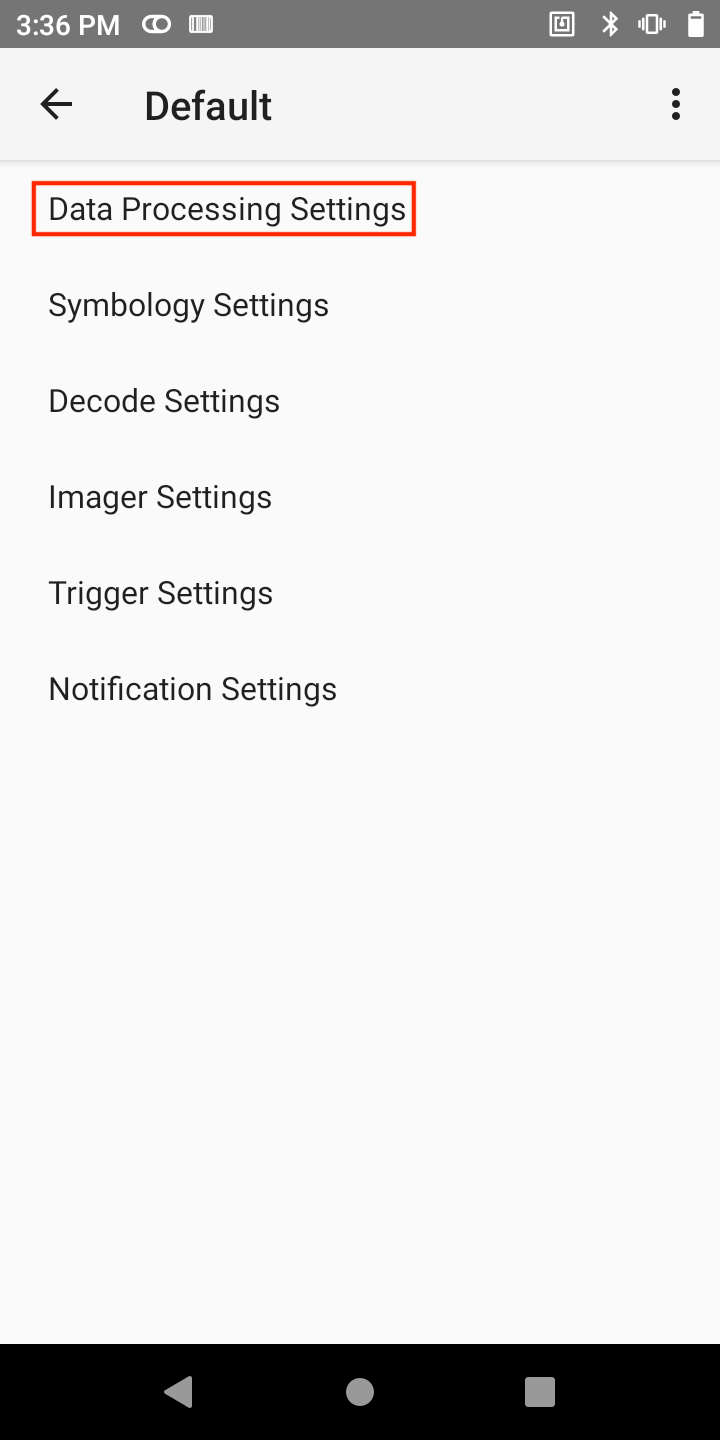
**Adjust data process settings**
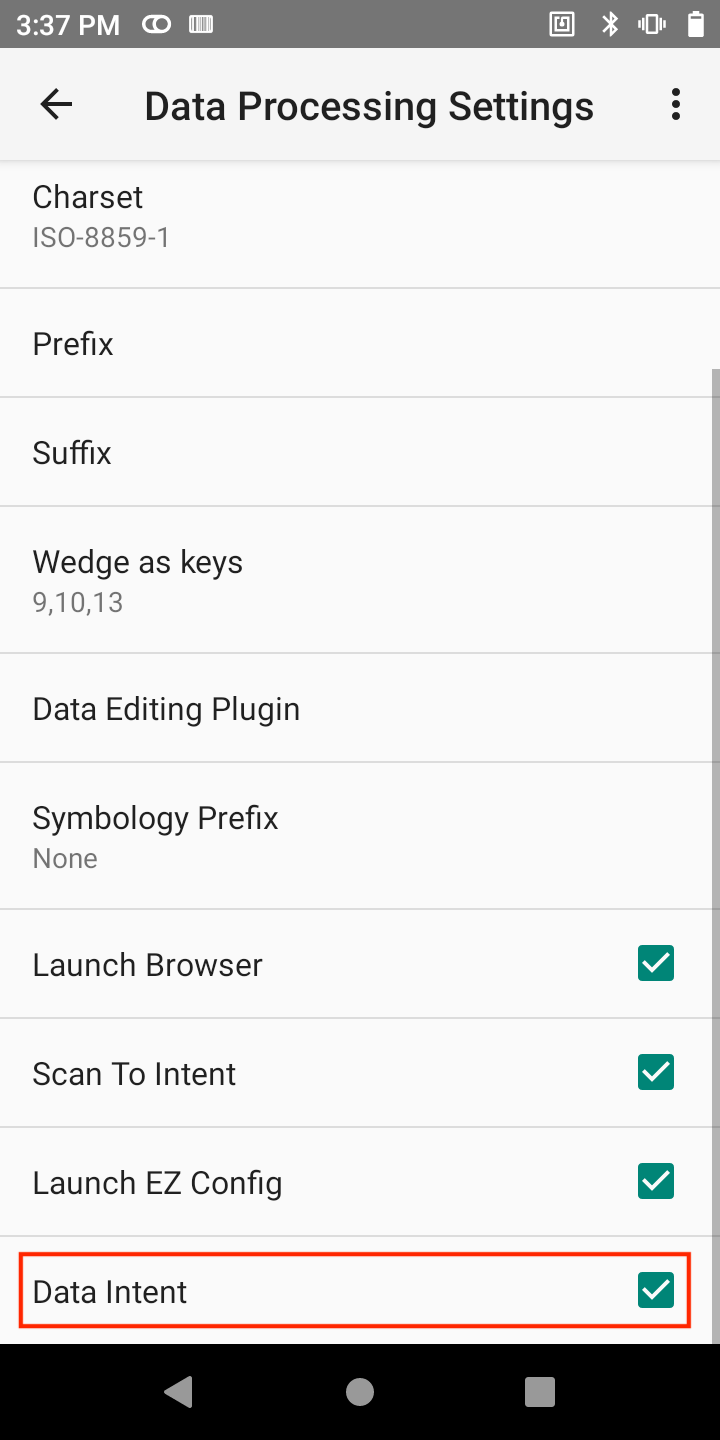
Select your profile, then select **Data Processing Settings**. Ensure the checkbox next to **Data Intent** is selected.
{% endstep %}
{% step %}
**Add data intent settings**
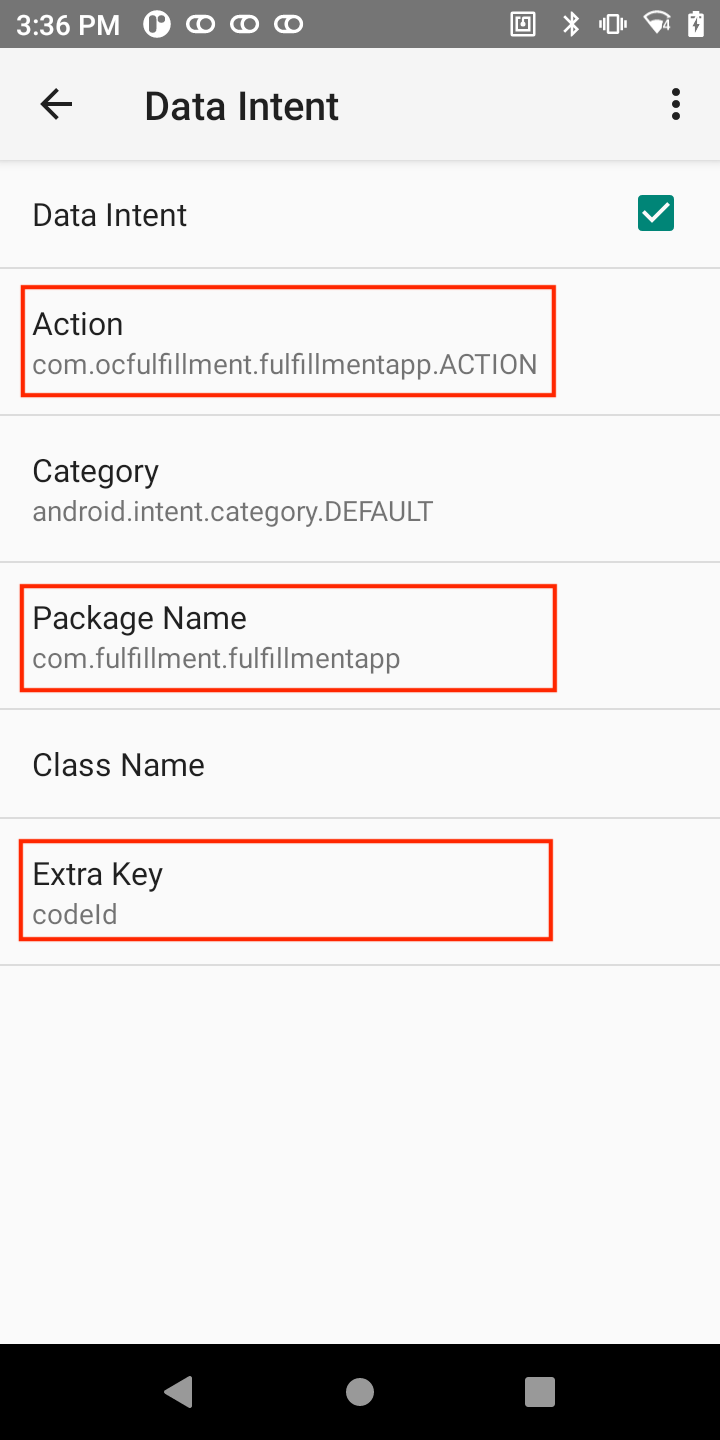
Different profiles can be created for each fulfillmenttools app. Make sure to enter the right data for each app. Tap **Data Intent**, and input the information for **Action**, **Package Name**, and **Extra Key** as below:
Store Operations app:
{% tabs %}
{% tab title="Action" %}
```
com.fulfillmenttools.storeoperations.ACTION
```
{% endtab %}
{% tab title="Package Name" %}
```
com.fulfillmenttools.storeoperations
```
{% endtab %}
{% tab title="Extra Key" %}
```
codeId
```
{% endtab %}
{% endtabs %}
Returns app:
{% tabs %}
{% tab title="Action" %}
```
com.ocfulfillment.multiplatform.app.ACTION
```
{% endtab %}
{% tab title="Package Name" %}
```
com.ocfulfillment.multiplatform.app
```
{% endtab %}
{% tab title="Extra Key" %}
```
codeId
```
{% endtab %}
{% endtabs %}
Inventory app:
{% tabs %}
{% tab title="Action" %}
```
com.ocfulfillment.inventoryapp.ACTION
```
{% endtab %}
{% tab title="Package Name" %}
```
com.ocfulfillment.inventoryapp
```
{% endtab %}
{% tab title="Extra Key" %}
```
codeId
```
{% endtab %}
{% endtabs %}
Then tap the back icon to save the changes.
{% endstep %}
{% step %}
**(Optional) Add extra barcode types**
Select **Symbology Settings**, then use the checkboxes to enable the relevant barcode types.
 
{% endstep %}
{% endstepper %}
## Supported barcode types
Honeywell hardware scanners support the following barcode types:
* `GS1 DataBar Expanded`
* `GS1 DataBar Expanded Stacked`
* `GS1 128 Composite Symbologie`
* `GS1 Databar Expanded Composite Symbologie`
* `GS1 Databar Expanded Stacked Composite Symbologie`
* `EAN-8 Composite Symbologie`
* `EAN-13 Composite Symbologie`
* `QR-Code`
* `Data Matrix`
* `Code-128`
* `UPC-A`
* `UPC-E`
* `2 of 5 Interleaved`
See the [list of Honeywell barcode symbology code identifiers](https://sps-support.honeywell.com/s/article/List-of-Honeywell-barcode-symbology-Code-Identifiers) for more information.
---
# Agent Instructions
This documentation is published with GitBook. GitBook is the documentation platform designed so that both humans and AI agents can read, navigate, and reason over technical content effectively. Learn more at gitbook.com.
## Querying This Documentation
If you need additional information that is not directly available in this page, you can query the documentation by asking a question.
Perform an HTTP GET request on the following URL with the `ask` and `goal` query parameters:
```
GET https://docs.fulfillmenttools.com/documentation/apps/technical-requirements/honeywell-hardware-scanner-configuration.md?ask=&goal=
```
`ask` is the immediate question: it should be specific, self-contained, and written in natural language.
`goal` is what the user is ultimately trying to achieve, the reason they need the answer. Sharing it helps GitBook give you a better, more relevant answer. A goal is most helpful when it describes the outcome the user wants rather than restating the question. For example, with `ask=how do I create an API token`, a goal like `automate deployments from our CI pipeline` lets GitBook tailor the answer to that use case.
The response will contain a direct answer to the question and relevant excerpts and sources from the documentation.
Use this mechanism when the answer is not explicitly present in the current page, you need clarification or additional context, or you want to retrieve related documentation sections.
{% endstep %}
{% step %}
**Select your scanner**
Select **Scanning**, then select the relevant scanner from the list.
{% endstep %}
{% step %}
**Adjust data process settings**
Select your profile, then select **Data Processing Settings**. Ensure the checkbox next to **Data Intent** is selected.
{% endstep %}
{% step %}
**Add data intent settings**
Different profiles can be created for each fulfillmenttools app. Make sure to enter the right data for each app. Tap **Data Intent**, and input the information for **Action**, **Package Name**, and **Extra Key** as below:
Store Operations app:
{% tabs %}
{% tab title="Action" %}
```
com.fulfillmenttools.storeoperations.ACTION
```
{% endtab %}
{% tab title="Package Name" %}
```
com.fulfillmenttools.storeoperations
```
{% endtab %}
{% tab title="Extra Key" %}
```
codeId
```
{% endtab %}
{% endtabs %}
Returns app:
{% tabs %}
{% tab title="Action" %}
```
com.ocfulfillment.multiplatform.app.ACTION
```
{% endtab %}
{% tab title="Package Name" %}
```
com.ocfulfillment.multiplatform.app
```
{% endtab %}
{% tab title="Extra Key" %}
```
codeId
```
{% endtab %}
{% endtabs %}
Inventory app:
{% tabs %}
{% tab title="Action" %}
```
com.ocfulfillment.inventoryapp.ACTION
```
{% endtab %}
{% tab title="Package Name" %}
```
com.ocfulfillment.inventoryapp
```
{% endtab %}
{% tab title="Extra Key" %}
```
codeId
```
{% endtab %}
{% endtabs %}
Then tap the back icon to save the changes.
{% endstep %}
{% step %}
**(Optional) Add extra barcode types**
Select **Symbology Settings**, then use the checkboxes to enable the relevant barcode types.
 
{% endstep %}
{% endstepper %}
## Supported barcode types
Honeywell hardware scanners support the following barcode types:
* `GS1 DataBar Expanded`
* `GS1 DataBar Expanded Stacked`
* `GS1 128 Composite Symbologie`
* `GS1 Databar Expanded Composite Symbologie`
* `GS1 Databar Expanded Stacked Composite Symbologie`
* `EAN-8 Composite Symbologie`
* `EAN-13 Composite Symbologie`
* `QR-Code`
* `Data Matrix`
* `Code-128`
* `UPC-A`
* `UPC-E`
* `2 of 5 Interleaved`
See the [list of Honeywell barcode symbology code identifiers](https://sps-support.honeywell.com/s/article/List-of-Honeywell-barcode-symbology-Code-Identifiers) for more information.
---
# Agent Instructions
This documentation is published with GitBook. GitBook is the documentation platform designed so that both humans and AI agents can read, navigate, and reason over technical content effectively. Learn more at gitbook.com.
## Querying This Documentation
If you need additional information that is not directly available in this page, you can query the documentation by asking a question.
Perform an HTTP GET request on the following URL with the `ask` and `goal` query parameters:
```
GET https://docs.fulfillmenttools.com/documentation/apps/technical-requirements/honeywell-hardware-scanner-configuration.md?ask=&goal=
```
`ask` is the immediate question: it should be specific, self-contained, and written in natural language.
`goal` is what the user is ultimately trying to achieve, the reason they need the answer. Sharing it helps GitBook give you a better, more relevant answer. A goal is most helpful when it describes the outcome the user wants rather than restating the question. For example, with `ask=how do I create an API token`, a goal like `automate deployments from our CI pipeline` lets GitBook tailor the answer to that use case.
The response will contain a direct answer to the question and relevant excerpts and sources from the documentation.
Use this mechanism when the answer is not explicitly present in the current page, you need clarification or additional context, or you want to retrieve related documentation sections.